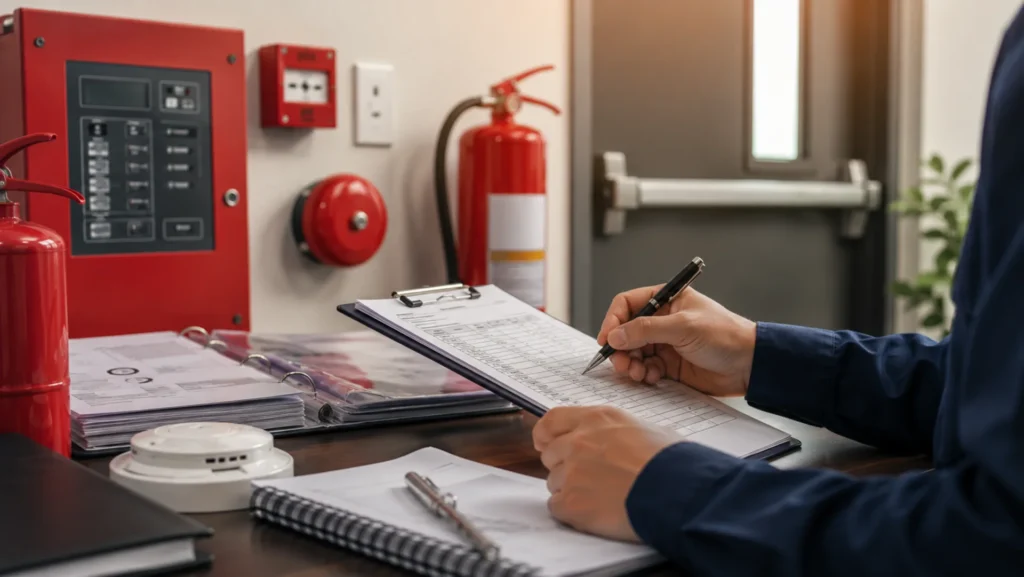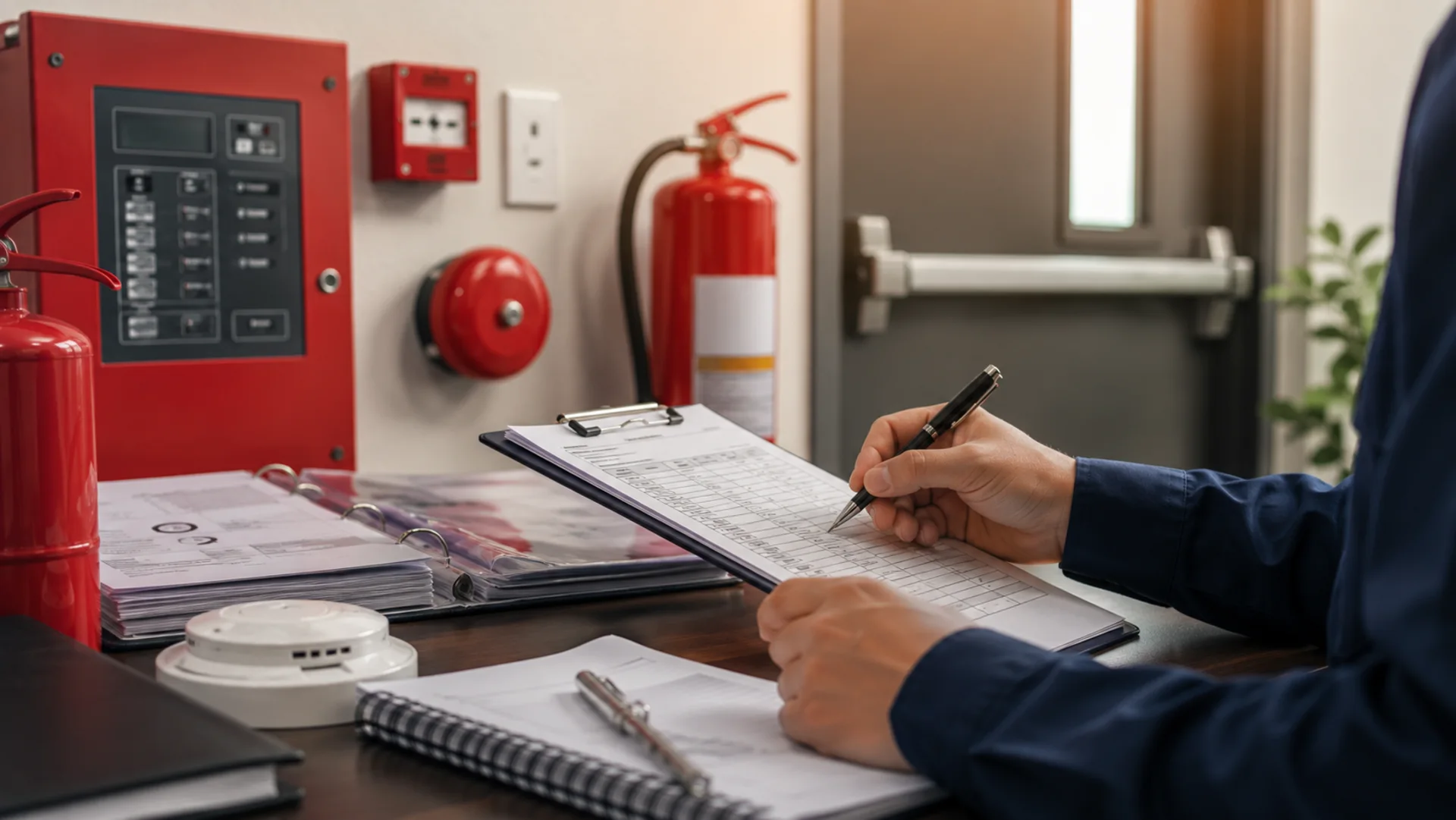
Proper documentation is one of the least emphasized fire safety standards. Owners of businesses tend to be very much concerned with installing fire alarms, fire extinguishers, and making plans for safe evacuations, failing to recognise that there are also laws in the UK that make it mandatory for them to have proper fire safety documentation.
Fire safety documentation helps to prove that all fire safety standards are being met and followed by providing proof of when, how, and by whom they were done.
This article covers what fire safety documentation entails, who should be in charge of it, and what changed in the laws regarding fire safety documentation in 2023.
What Is Fire Safety Documentation?
Fire safety documentation is the collective term for the records a building must keep to demonstrate it is meeting its fire safety obligations. It isn’t a single document, but a set of records built up over time, covering assessments, checks, maintenance, and training.
What Records Should You Keep?
Fire safety documentation typically includes:
- Fire risk assessments – the core document identifying hazards, people at risk, and control measures
- Fire safety log books – ongoing records of checks, tests, and maintenance
- Fire alarm and detection system test certificates
- Fire door inspection records
- Emergency lighting test logs
- Staff training records – evidence that employees know fire procedures
- Evacuation drill records
- Maintenance and servicing certificates for fire safety equipment
The Responsible Person should have access to these records and understand their importance, even where day-to-day upkeep is delegated to someone else.
Who Is Responsible for Fire Safety Records?
The Regulatory Reform (Fire Safety) Order 2005 defines the individual responsible for fire safety in the building as the “Responsible Person”. This could be an employer, owner, landlord, occupier, or other individuals with some form of control over the premises, depending on the nature of the premises and control. There can be more than one Responsible Person in some buildings, especially in multi-occupied premises, whereby each Responsible Person is responsible for the parts of the building which he controls.
In cases where more than one Responsible Person exists in a single building, it is also expected of them to work together on fire safety issues concerning the shared areas.
The record-keeping in bigger organisations is left to the facilities manager or the health and safety officer, although legally the responsibility falls on the named Responsible Person for that building.
Fire Risk Assessments and Documentation
The Fire Risk Assessment is at the heart of all fire safety documentation. It outlines what the hazards are, who may be at risk, and how that risk will be managed. It must be kept under review and regularly updated as any change occurs in the building, its occupancy, and its usage.
What Should a Fire Safety Log Book Include?
One of the most valuable documents concerning fire safety is a fire safety log book. It is a continuous account of fire safety activities on the premises that can be found in one place and easily accessed.
The content of a usual log book may consist of:
- Dates of tests of fire alarm systems
- Results of fire door tests and any faults that were discovered
- Tests of emergency lights
- Inspections of fire extinguishers
- Information on fire drills and fire training for the staff
- Information about any false alarms or fire incidents
The form of fire safety log books is not determined by the Fire Safety Order, but the record of maintenance, testing and training should be kept. If you’re unsure how to structure yours, our guide on BS 5839 fire alarm system compliance covers testing frequency and standards in more detail.
Fire Alarm, Fire Door and Emergency Lighting Records
Both fire doors and fire alarms require evidence of testing, including details of what has been tested and when.
Fire doors will have to be inspected from time to time for any signs of damage, correct operation, and tight seals. Any defects that are found should be listed and fixed promptly. The fire alarm system will also have to be regularly tested according to the applicable British Standard. This needs to be done and logged in the logbook.
Insufficient or inconsistent record-keeping is one of the most frequent problems detected in fire safety inspections. It will be helpful to keep zone-specific records if there are several fire zones in your building. Our breakdown of fire alarm zoning explains how zoned systems are typically documented.
Fire Safety Documentation Requirements After 2023
Since 1 October 2023, changes introduced by Section 156 of the Building Safety Act 2022 have placed additional recording duties on every Responsible Person, regardless of the size or type of premises. These changes mean Responsible Persons must now:
- Record the fire risk assessment in full, including all findings, rather than just specific extracts
- Record their fire safety arrangements, showing how fire safety is managed on the premises
- Record the identity of any person or organisation appointed to carry out or review the fire risk assessment
- Keep contact information up to date and share relevant fire safety information with other Responsible Persons where applicable
- Take reasonably practicable steps to identify other Responsible Persons sharing the building
Records should be kept available so they can be provided to the fire and rescue authority when requested.
How Long Should Fire Safety Records Be Kept?
The retention period required by law for fire safety documents is not standard across all types of documents. It’s always better to retain documents as long as they are still useful for demonstrating that proper management of fire safety procedures has taken place. Additionally, take into account the special retention periods required for your premises or sector.
Practically speaking, this translates to:
- Retention of the most recent fire safety risk assessment and its previous versions
- Retention of the testing and maintenance records as long as the piece of equipment or the whole system is operational
- Retention of the training and drill records long enough to demonstrate consistent compliance
As a rule of thumb, when in doubt, retain the document. The records relating to fire safety procedures can always be asked for at a later date during an insurance claim or an investigation into an incident.
What Happens If Fire Safety Records Are Missing?
Missing or incomplete fire safety documentation isn’t just a paperwork issue. Depending on the circumstances, it can lead to:
- Possible enforcement action from the local fire and rescue authority, which has a range of sanctions available for non-compliance with the Fire Safety Order
- Fines or prosecution under the Regulatory Reform (Fire Safety) Order 2005
- Difficulties with an insurance claim, if you’re unable to provide evidence that required fire safety measures were properly maintained
- Increased risk to life, if maintenance or testing was missed and not caught in time
In the event of a fire, documentation can also help investigators understand what happened and whether the correct procedures were followed.
Keep Your Fire Safety Documentation in Order
Fire safety documentation isn’t just about ticking a legal box. It’s evidence that a building is genuinely being looked after, and it can make a real difference if something goes wrong. If you’re not confident your current records meet what’s required, get in touch with our team to review your fire safety compliance.