Terms relating to fire safety are often interchanged. Most businesses think a fire alarm and a fire suppression system perform the same function. This is not true. While one detects the threat, the other controls the situation. Knowledge of the distinction may mean everything between protecting your property, data, and personnel.
On this blog, we will demystify the concept of fire detection and fire suppression, find out why the majority of premises require both, and how Controlled Ltd can assist you in setting up your site with the appropriate solutions.
What Is a Fire Detection System?
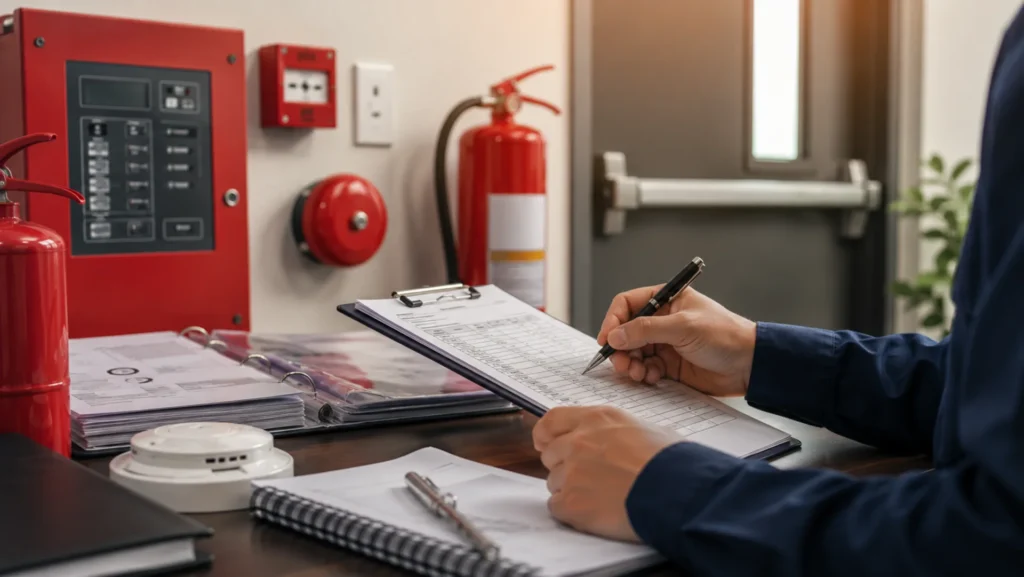
A fire detection system is a mechanism that detects early signs of fire. It employs smoke detectors, heat sensors, or aspiration detection to detect smoke particles or high temperatures before a fire occurs. The detection system triggers an alarm to warn about the presence of fire and hence allow for evacuation.
Advanced fire detection systems such as loop addressable fire alarm systems work even better. In contrast to conventional fire alarm systems, which give an alarm indicating the affected zones, advanced fire alarm systems indicate the exact devices that have been triggered. This topic is further elaborated in our post on “How Fire Alarm Zones Work”.
The fire detection system gives an early warning. It does not extinguish the fire but indicates the presence of a fire.
What Is a Fire Suppression System?
Fire suppression systems offer another solution. While fire alarms will only warn, suppression systems act on their own. The moment a fire outbreak is detected, such a system acts immediately, releasing a substance to control the spread of the fire.
Suppression systems by Controlled utilise gas and clean agent technology, making them perfect for server rooms, data centers, commercial kitchens, electrical panels, and archives. Having fire suppression in such areas means the difference between having a small problem and completely losing all your valuable equipment.
In contrast with standard sprinklers, clean agents do not leave any residue that could harm sensitive electronic devices. Thus, this type of system can be really helpful in areas where both fire and water can be harmful.
The Key Difference: Warning vs Action
The best way to put this into perspective would be as follows. Fire detection systems monitor and alarm; suppression systems monitor and act. While one will buy you time, the latter will eliminate the danger.
Fire usually breaks out as a tiny spark. A fire detection system will detect that spark and alarm your crew or the monitoring service company. But that in itself will not prevent the fire from spreading. This is what a suppression system does – it is activated automatically and stops the spread of the fire.
Companies that only have fire detection installed have only half the story covered. Companies that combine the detection layers with the suppression layer will get a full safety package, which operates independently of anyone.
Why You Need Both Working Together
Suppression systems are not standalone units. They require a trigger to activate, and that trigger can only come from your fire detection system. When both fire suppression and detection systems are fully integrated, the detection system will detect the presence of a fire while the suppression system immediately acts upon it, even before anyone is aware of the incident.
This is particularly significant in unmanned premises. Server rooms, communications cabinets, and data archive centers do not have staff operating there all day long. These two systems integrated together assure protection for your valuable assets even when there is no one there to watch them.
Controlled designs each fire detection and suppression system to fully integrate with your existing fire detection and alarm system, something we discuss further on our compatibility and customisation page.
Where a Fire Suppression Matters Most
Not all locations require these systems, but some definitely do. Controlled requires these systems in:
- Data centers and server rooms, which contain fire-sensitive and water-sensitive information that cannot be replaced – also guarded by aspirating smoke detection for early warning
- Commercial kitchens, typical of the hospitality industry, where grease and heat make fires inevitable
- Electrical enclosures and control rooms, where sprinkler systems would cause more damage than good
- Archives, museums, heritage sites, where the items simply cannot be replaced, and laboratories in industries such as pharmaceutical, where chemical-resistant detection is vital
In all of these locations, a quick and automatic system to suppress fires does much more damage limitation than just detection and evacuation.
Compliance Matters Too
For these systems to operate effectively, in accordance with the UK fire systems regulations, they should adhere to certain standards such as BS EN ISO 14520 and BS 5839. All these standards are meant to cover all aspects of fire system installation, including system design, maintenance, and monitoring of performance.
Controlled Ltd is SP203-1 accredited in fire systems design, installation, and maintenance.
Choosing the Right Combination for Your Business
Every building is different, so the right mix of detection and suppression will vary. A small office might only need a standard fire alarm system. A data centre or commercial kitchen will almost certainly need dedicated fire suppression layered on top.
The best way to know what your building needs is a proper risk assessment. We explain when this matters most in When Do You Need Security Consultation in the UK. Controlled’s team looks at your site, your equipment, and your risk profile, drawing on the technical expertise built up over 25 years, before recommending whether a fire hazard suppression solution is right for you, and which type suits your space best.
Why Choose Controlled Ltd
At Controlled, we’ve spent over 25 years helping UK businesses protect their people, property, and equipment with the right fire detection and fire suppression system combination. We don’t offer generic packages. Every suppression solution we design is tailored to your building, your risk level, and your budget — read more about our approach on our Why Us page, or see it in action in our case studies.
Beyond fire suppression, we also offer loop addressable fire detection, aspirating smoke detection, cloud-based CCTV, and Grade 3 intruder alarm systems, so your entire building can be protected under one connected, fully compliant safety strategy.
If you’re not sure whether your business needs a fire suppression solutions, get in touch with Controlled Ltd today for a free consultation. Our team will assess your site and recommend the right solution to keep your people, property, and critical assets safe.