The hospitality business operates 24 hours a day. The hotels accept visitors at all times of the day and night, while the restaurants are packed for each shift. All that creates an entirely different kind of challenge in terms of fire safety and security than the typical office building.
This is what every hospitality manager in the UK needs to do.
The Unique Risk Profile of Hospitality Venues
The hotels and restaurants are exposed to hazards not common to most other buildings. Customers are not familiar with the exits in case of emergencies. The kitchens have open flames and heat sources during working hours. Lobbies, bars, and restaurants are always filled with crowds. Also, the hospitality business can’t halt operations in the middle of the night for inspection purposes, as commercial firms would.
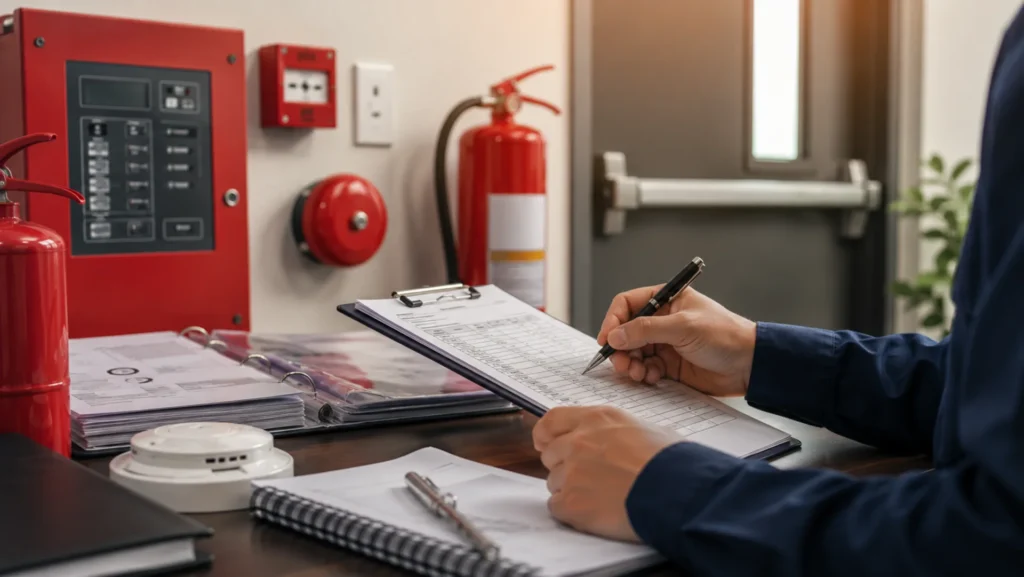
Hence, the fire detection systems need to remain active and ready at all times.
Fire Suppression Systems: A Non-Negotiable for Kitchens
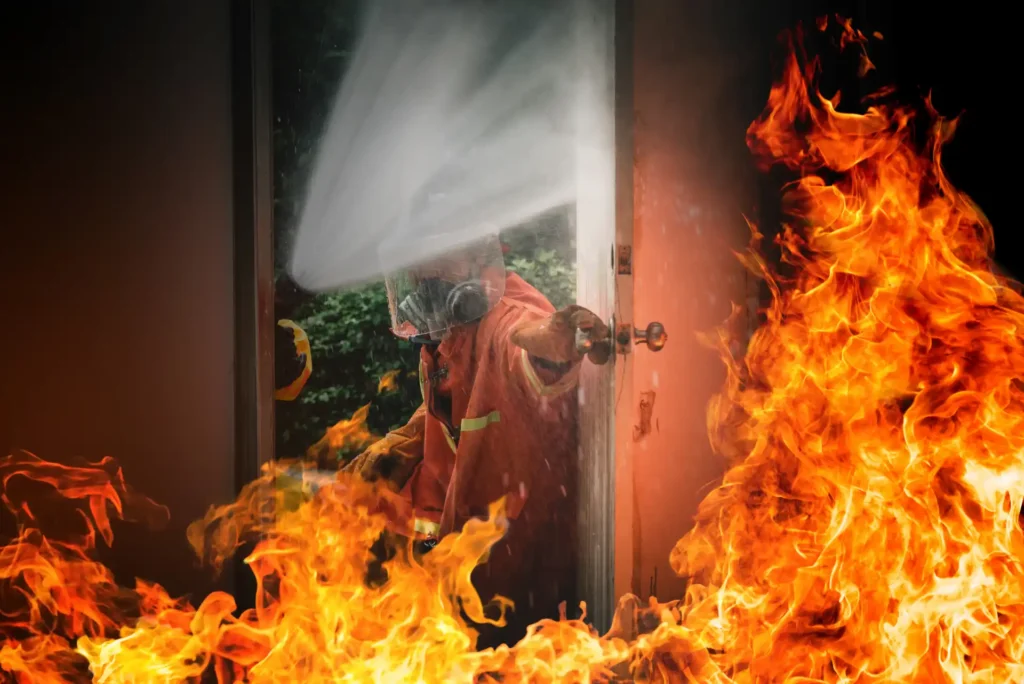
Commercial kitchens are among the most dangerous places in a building. The cooking grease, oil, and LP gas make it very easy for a fire to spread within a second. An ordinary sprinkler system cannot handle the case.
There is a need for the installation of a fire suppression system specifically designed for use in the kitchen environment. The system will extinguish the fire, cool the fuel, and prevent it from reigniting. It is also possible that fire safety regulations in the UK would require the installation of a fire suppression system in the commercial kitchen.
A hotel having its own restaurant needs to have a fire suppression system in place.
Smoke Detection That Keeps Up With Hospitality Environments
Traditional point-type smoke detectors do not function effectively in a large space within a hotel. For example, they will not function properly in an atrium, ballroom, or restaurant that has high ceilings. Aspirating smoke detectors enable early detection through the sampling of air from a wide space.
Early detection is important in a crowd.
Access Control and CCTV: Protecting Guests and Assets
However, security in the hospitality sector is not limited to fire security only. The hotel welcomes guests and others. This includes contractors, delivery people, and event attendees who need different types of access.
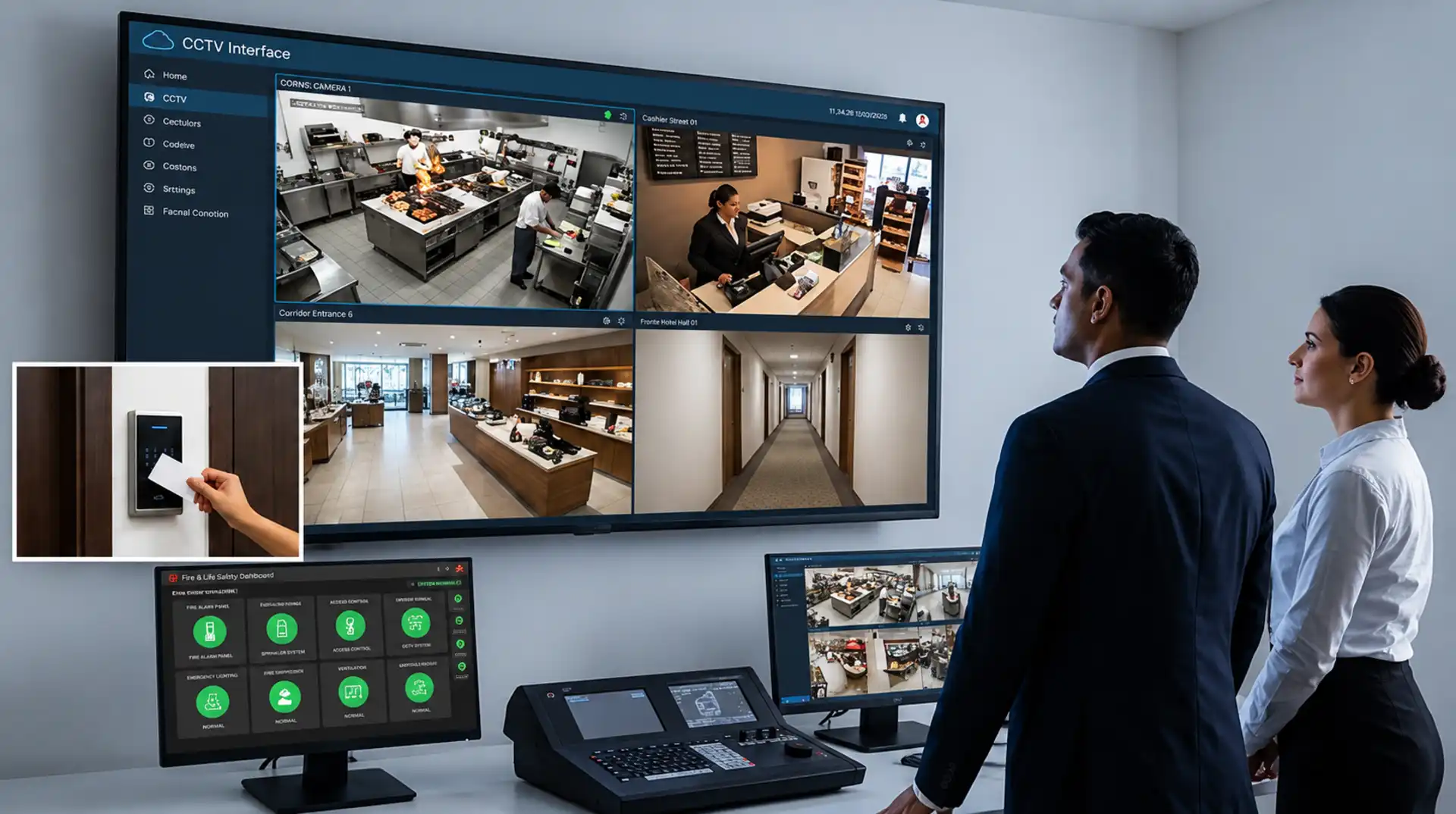
The advanced access control system works with a cloud-based CCTV system. This lets management see who enters which areas at any time. In the case of restaurants, CCTV cameras in the entrance and cashier areas help to prevent theft.
Compliance Is the Floor, Not the Ceiling
The Fire Safety Order from the Regulatory Reform Act 2005 sets rules for the hospitality industry. Fire detection equipment must meet BS 5839 standards. However, just complying with this standard will not suffice; we need something better.
Final Thought
When it comes to hospitality, safety equals brand. Your customers’ safety is your main priority. Investing in a fire suppression system and security infrastructure is key. This protects your customers, your property, and your reputation.
The fire and security systems offered by Controlled Ltd have been customised to cater to hospitality establishments to ensure that these establishments comply with UK rules and regulations. You’ll also receive a complete system. It covers all fire and security protection in one package. This is unlike many other companies, where customers have to purchase separate products for different services.
You can explore the full range of security solutions available for hospitality venues directly on the Controlled website.